
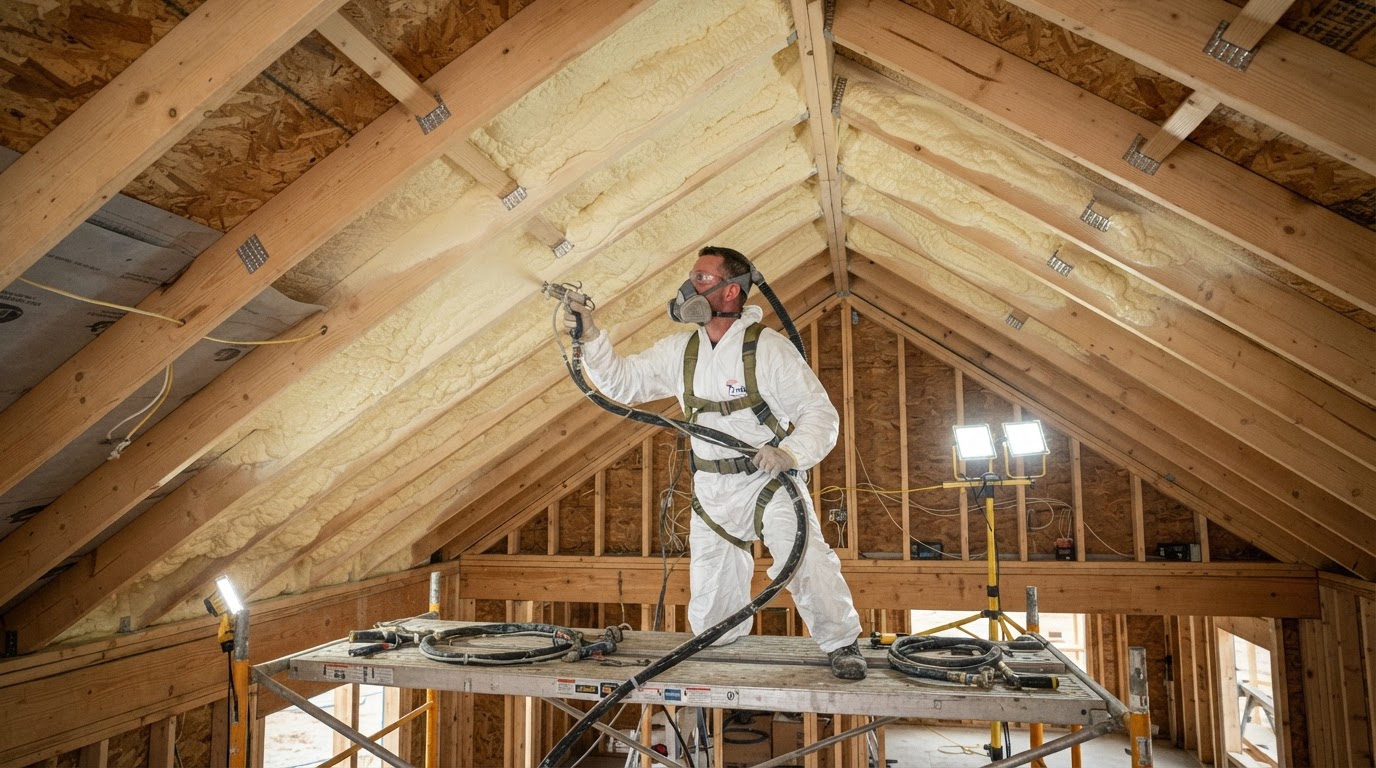
Spray Foam Insulation in San Marcos, TX
Residential, Commercial, Attic, Metal Building & Barndominium Spray Foam Solutions
San Marcos Spray Foam Installation provides high-performance spray foam insulation solutions for property owners throughout San Marcos, Texas, and surrounding Central Texas communities. Our specialized team handles residential homes, commercial facilities, new construction projects, and existing retrofit applications. Whether you are insulating an expansive metal building, sealing a Texas barndominium, creating an unvented conditioned attic, or upgrading garage and exterior wall assemblies, we help you determine whether open-cell or closed-cell polyurethane foam matches your architectural requirements. We combine building envelope science with precision application techniques to control seasonal thermal transfer, stop convective air leakage, and establish durable temperature stability across Hays County.
Discuss Your Insulation Project
Call our local line directly or complete our quick online form below.
Spray Foam Insulation Reviews & Ratings Near San Marcos
Click a platform below to leave your feedback. See what Central Texas homeowners say about our work.
What Our Customers Say
5 reviewsRobert K.
San Marcos, TX
"New construction spray foam in our walls and ceiling. Professional crew, thorough cleanup, and the home is noticeably quieter and more efficient. Top-notch service."
Michael R.
Kyle, TX
"San Marcos Spray Foam Installation did a fantastic job on our attic roof deck. The crew was professional, on time, and the house already feels cooler. Highly recommend for anyone in Central Texas."
Jennifer T.
New Braunfels, TX
"We had closed cell foam installed in our garage and workshop. The difference in temperature and humidity is night and day. Clean work and a fair price."
Spray Foam Insulation Near San Marcos, TX for Homes, Buildings & New Construction
Spray foam insulation functions as an integrated thermal insulation and air-sealing barrier that expands within building cavities to stop convective airflow, seal hidden penetrations, and establish a continuous building envelope in San Marcos, Texas. Unlike traditional loose-fill cellulose or fiberglass batts, spray polyurethane foam adheres directly to framing studs, roof rafters, and exterior sheathing.
Property owners throughout the San Marcos area and the broader I-35 corridor face persistent climate challenges. High summer temperatures, sustained humidity, and sudden seasonal winter cold fronts place heavy mechanical stress on residential and commercial structures. When ambient outdoor air infiltrates attics, exterior walls, or unconditioned floor assemblies, heated air and moisture bypass conventional fibrous insulation. This convective movement creates stubborn hot rooms, forces HVAC equipment to run continuously, and allows outdoor dust and humidity into conditioned living spaces.
By sealing gaps, cracks, electrical conduits, plumbing chases, and framing joints, spray foam insulation closes the thermal bypass pathways that compromise building efficiency. In residential attics, converting a traditionally vented, sweltering space into an unvented conditioned roof deck assembly shields ductwork from 130°F+ summer heat loads. For steel metal buildings, workshops, and Texas barndominiums, spray foam adheres directly to ribbed metal roof and wall panels, controlling surface condensation sweating while moderating interior surface temperatures.
Every property requires a thoughtful approach. Project recommendations depend specifically on building design, assembly type, ventilation strategy, moisture conditions, local code requirements, intended space use, and product specifications. We work closely with San Marcos homeowners, general contractors, and business operators to evaluate whether open-cell or closed-cell polyurethane foam aligns with their assembly goals.
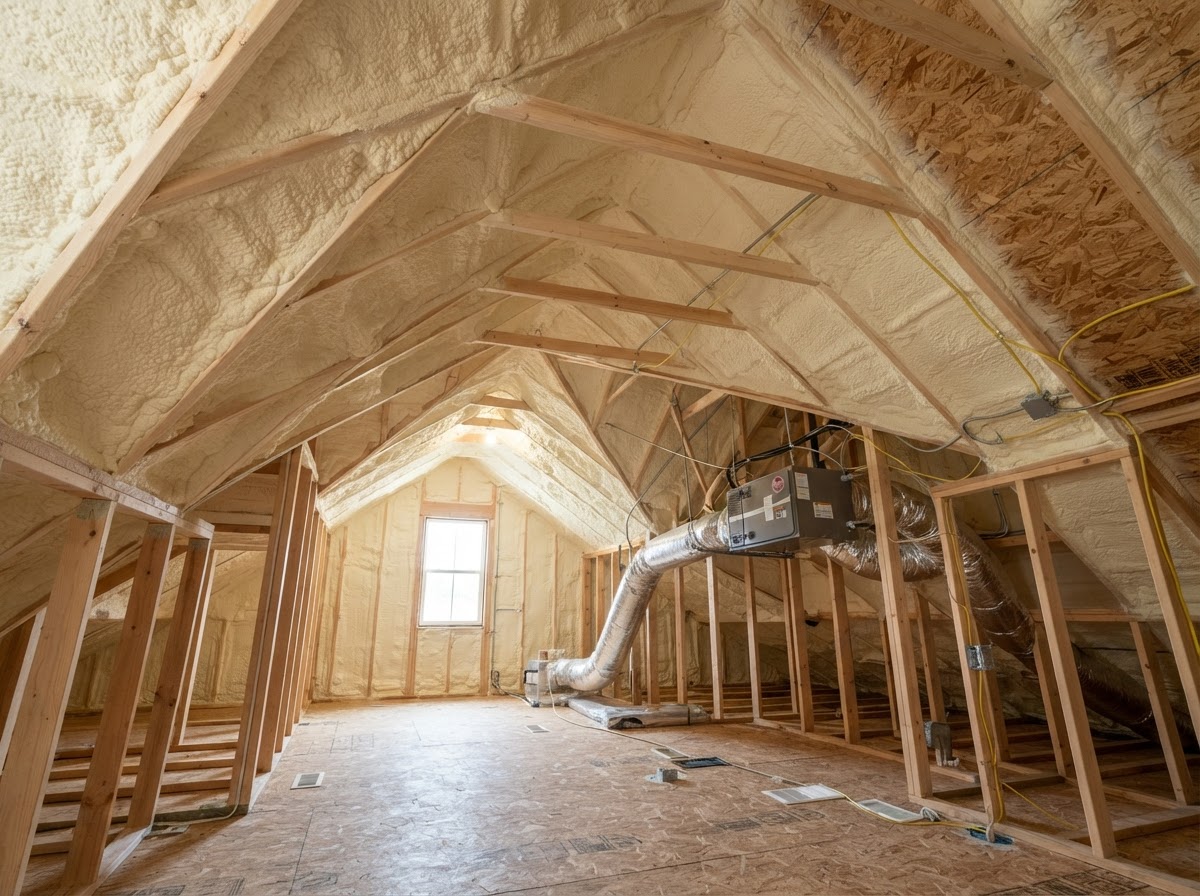
Key Performance Factors
- •Air Infiltration Control: Eliminates drafts and gaps where heated Texas air enters.
- •HVAC Optimization: Protects attic-mounted ductwork inside a conditioned envelope.
- •Assembly Suitability: Matched specifically to wood framing, steel girders, or concrete.
Spray Foam Insulation Services in San Marcos, TX
Explore our core spray foam installation services designed for residential homes, custom builds, steel metal buildings, barndominiums, and commercial facilities throughout the San Marcos area.
Spray Foam Insulation
Complete high-performance spray foam insulation solutions for residential, commercial, metal building, and new construction properties across San Marcos and Central Texas.
Residential Spray Foam Insulation
Custom residential spray foam applications engineered to improve indoor comfort, seal building envelope air leaks, and stabilize interior living temperatures in San Marcos homes.
Commercial Spray Foam Insulation
Commercial-grade thermal barrier and air barrier spray foam installations for offices, retail spaces, warehouses, municipal structures, and commercial properties.
Open Cell Spray Foam Insulation
Flexible, high-expanding open-cell polyurethane foam delivering exceptional air sealing and sound dampening for interior wall cavities, attics, and residential assemblies.
Closed Cell Spray Foam Insulation
High-density rigid closed-cell foam offering superior thermal resistance per inch, moisture vapor barrier properties, and structural rigidity for metal buildings and walls.
Attic Spray Foam Insulation
Transform hot Central Texas attics by sealing thermal bypasses and maintaining conditioned attic spaces that protect ductwork and reduce heat transfer.
Roof Deck & Unvented Attic Spray Foam
Direct application to the underside of roof rafters creating a sealed, semi-conditioned building envelope that moves HVAC systems into a protected environment.
Wall Spray Foam Insulation
Precision cavity fill for exterior and interior framed walls, eliminating draft pathways, settling risks, and thermal flanking in residential and commercial builds.
New Construction Spray Foam Insulation
Complete insulation packages for custom home builders, general contractors, and developers seeking optimal building envelope performance and code compliance.
Existing Home & Retrofit Spray Foam
Retrofitting existing San Marcos properties with targeted spray foam applications to address hot rooms, persistent drafts, and aging insulation assemblies.
Metal Building & Steel Building Spray Foam
Essential thermal control and condensation mitigation for pre-engineered metal buildings, steel shops, agricultural structures, and commercial warehouses.
Barndominium Spray Foam Insulation
Specialized insulation systems for Texas barndominiums, sealing steel shells, high ceilings, and expansive living spaces against extreme Hill Country weather.
Garage Spray Foam Insulation
Convert attached or detached garages into functional, comfortable workspaces, home gyms, or workshops with dedicated wall and ceiling spray foam insulation.
Specialty Spray Foam Insulation Applications
Beyond core residential and commercial services, San Marcos Spray Foam Installation handles specialized building types across the San Marcos area — from workshops and pole barns to shipping containers, hangars, crawl spaces, and cathedral ceilings.
View all specialty applications through the Services menu above.
Have a unique structure or complex building design in San Marcos or surrounding communities?
Complete Spray Foam Insulation Services Near San Marcos
San Marcos Spray Foam Installation provides professional spray foam insulation solutions for residential, commercial, new-construction, attic, roof-deck, wall, metal-building, pole-barn, workshop, and other applicable insulation projects throughout San Marcos and surrounding Central Texas communities. The expanded service information below helps property owners better understand the potential benefits of each application, the differences between spray foam applications, important project considerations, common installation situations, building-envelope and moisture considerations, accessibility and preparation requirements, and when open-cell or closed-cell products may be appropriate.
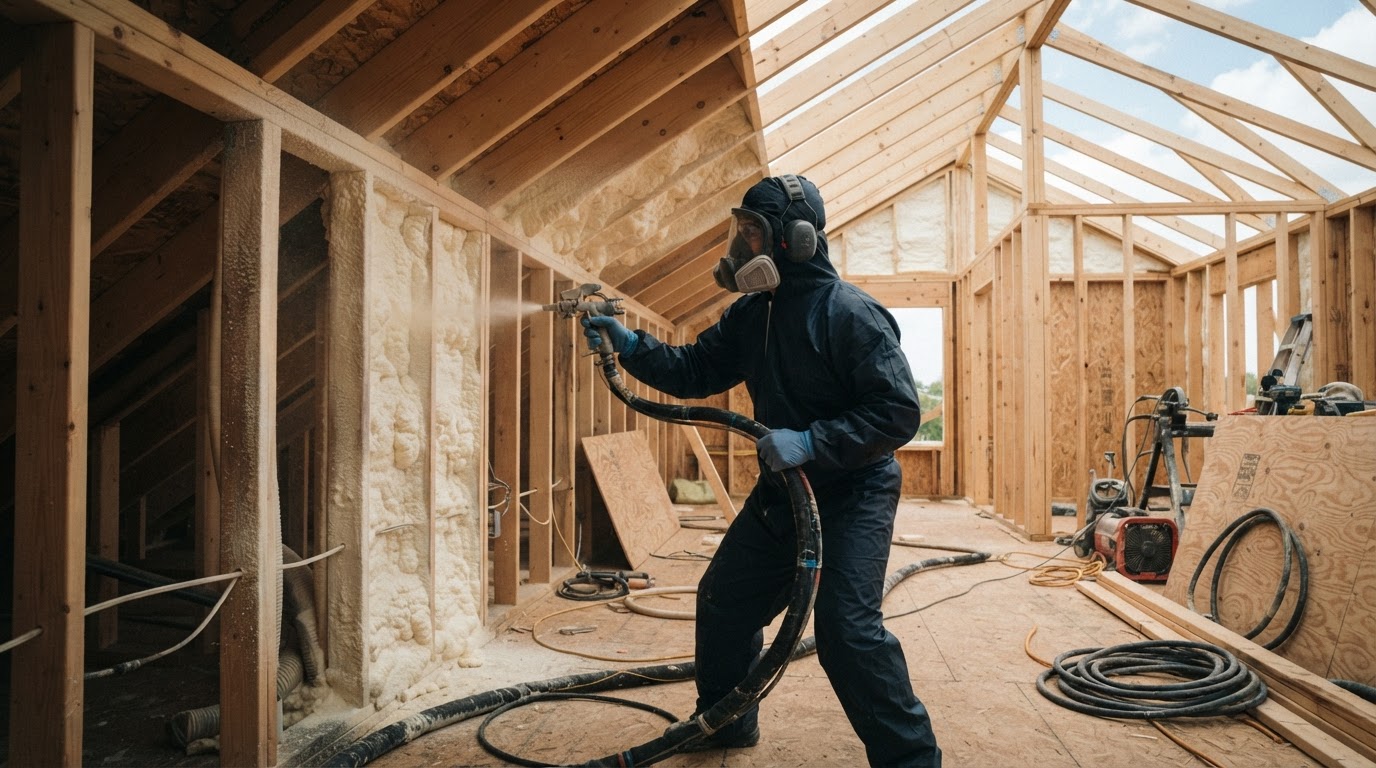
Spray Foam Insulation in San Marcos
Professional spray foam insulation supports residential, commercial, agricultural, and specialty structures throughout the San Marcos area by combining thermal insulation and air control in a single applied system. The material expands within building cavities to help seal gaps, penetrations, and irregular framing that fibrous insulation can miss.
Because every building is different, the appropriate foam type, installed thickness, and application approach depend on the assembly, substrate, access, existing insulation, and the property owner's performance goals. Open-cell and closed-cell products each have distinct physical characteristics that suit different assemblies and moisture strategies.
Project planning also considers HVAC and ventilation, new construction versus retrofit conditions, and any applicable thermal or ignition barrier requirements, so the installed system works with the building rather than against it.
Benefits for San Marcos Property Owners
- Improved control of unwanted air movement through gaps and penetrations
- Helps support a more continuous, better-performing building envelope
- More consistent indoor comfort when correctly selected and installed
- Insulation and air-sealing combined in one applied system
- Conforms to irregular cavities and difficult building assemblies
Installation Features & Project Considerations
- Building-area evaluation before application
- Assessment of existing insulation conditions
- Open-cell or closed-cell product selection
- Surface preparation and substrate review
- Application-depth planning matched to the assembly
- Ventilation and building-envelope considerations
Popular Applications & Solutions
- Attics and roof decks
- Exterior wall cavities
- Metal buildings and workshops
- New construction framing
- Existing-building retrofit applications
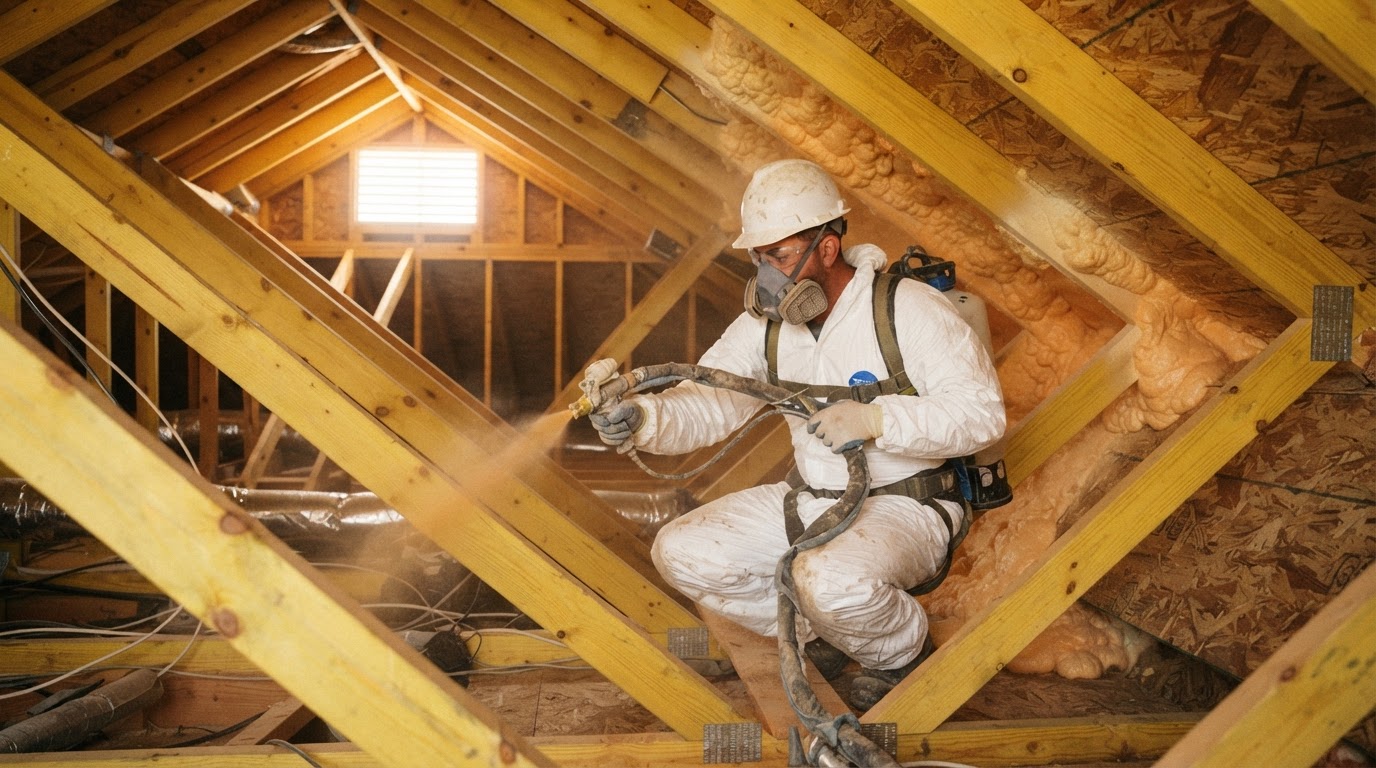
Residential Spray Foam Insulation Near San Marcos
Residential spray foam insulation serves houses throughout San Marcos and nearby Central Texas communities, with common applications in attics, roof decks, exterior walls, home additions, and remodeling projects. Both newly framed homes and existing houses undergoing insulation upgrades can benefit when the assembly and access allow.
A residential project requires consideration of existing insulation, the building-envelope configuration, HVAC equipment, ventilation, moisture conditions, and whether the space is occupied or unfinished. Open-cell and closed-cell products are selected based on where the foam will live and how the home is assembled.
Careful evaluation helps ensure the spray foam works alongside the home's mechanical systems rather than creating unintended ventilation or moisture interactions.
Benefits for San Marcos Property Owners
- Reduced uncontrolled air movement through the home envelope
- Improved comfort consistency across rooms and seasons
- Better coverage around irregular framing and penetrations
- Building-envelope improvement opportunities for older homes
- Long-term insulation performance when properly installed
Installation Features & Project Considerations
- Home-envelope evaluation
- Attic and wall access review
- Existing insulation considerations
- Foam-type selection for the assembly
- HVAC and ventilation coordination
- Preparation and cleanup planning
Popular Applications & Solutions
- Existing-home insulation upgrades
- New-home spray foam packages
- Attic insulation and roofline work
- Wall insulation during remodels
- Home additions and bonus rooms
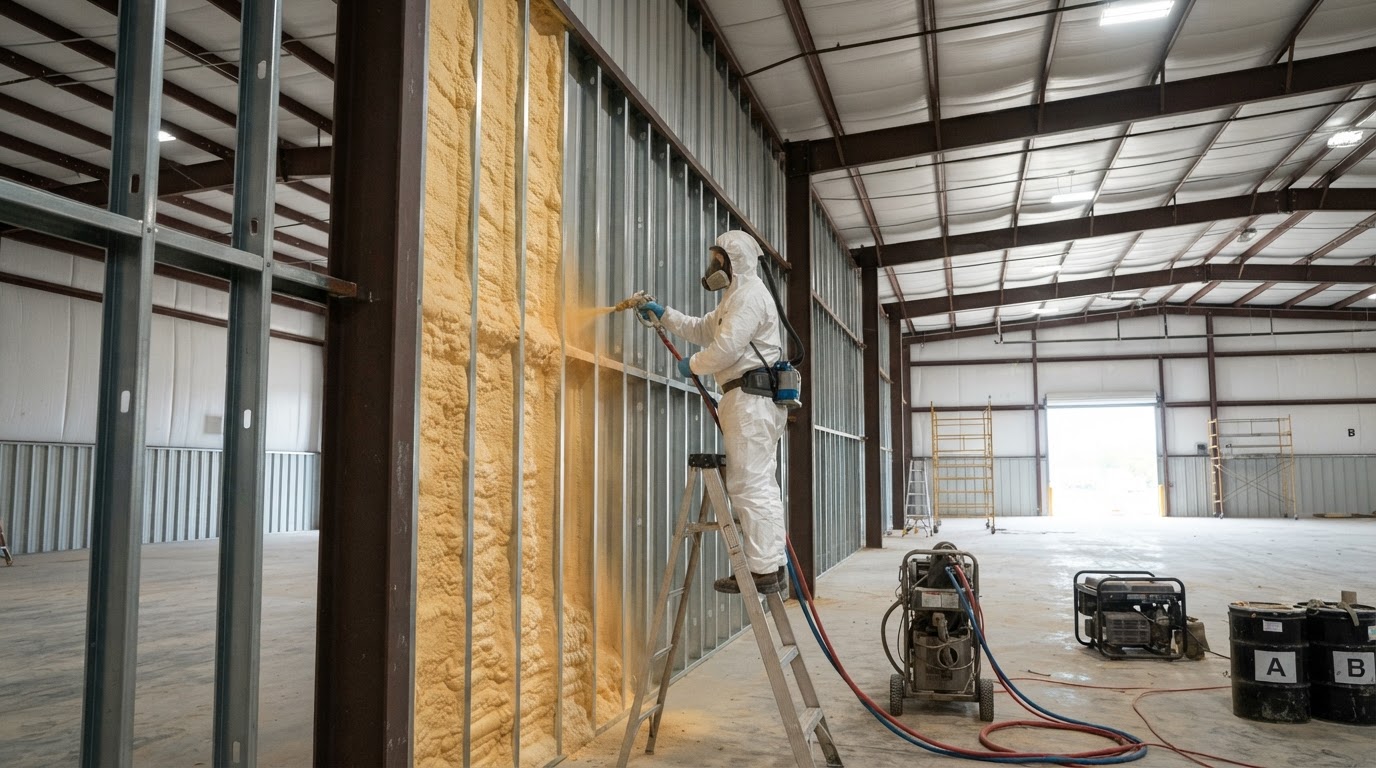
Commercial Spray Foam Insulation in San Marcos
Commercial spray foam insulation addresses the building-envelope needs of offices, retail and service buildings, warehouses, storage facilities, and commercial metal structures in the San Marcos area. Both new commercial construction and retrofit applications can be evaluated for suitable foam assemblies.
Commercial projects introduce additional considerations: building size, equipment access, surface preparation, open-cell versus closed-cell selection, mechanical systems, occupancy, and installation sequencing that coordinates with other trades. Code-related thermal or ignition barrier requirements may also apply.
Planning the application around the building's use and operational schedule helps the insulation perform as part of a coordinated commercial envelope.
Benefits for San Marcos Property Owners
- Improved air-control strategy across large surfaces
- Insulation that conforms to irregular building shapes
- Better-performing conditioned spaces where designed appropriately
- Reduced uncontrolled air movement through the envelope
- Flexible application for many commercial building assemblies
Installation Features & Project Considerations
- Commercial project evaluation
- Large-area application planning
- Substrate preparation for commercial surfaces
- Equipment-access requirements
- Installation sequencing and trade coordination
- Coordination with mechanical and construction systems
Popular Applications & Solutions
- Warehouses and storage facilities
- Shops and retail buildings
- Office and service buildings
- Commercial metal buildings
- New commercial construction
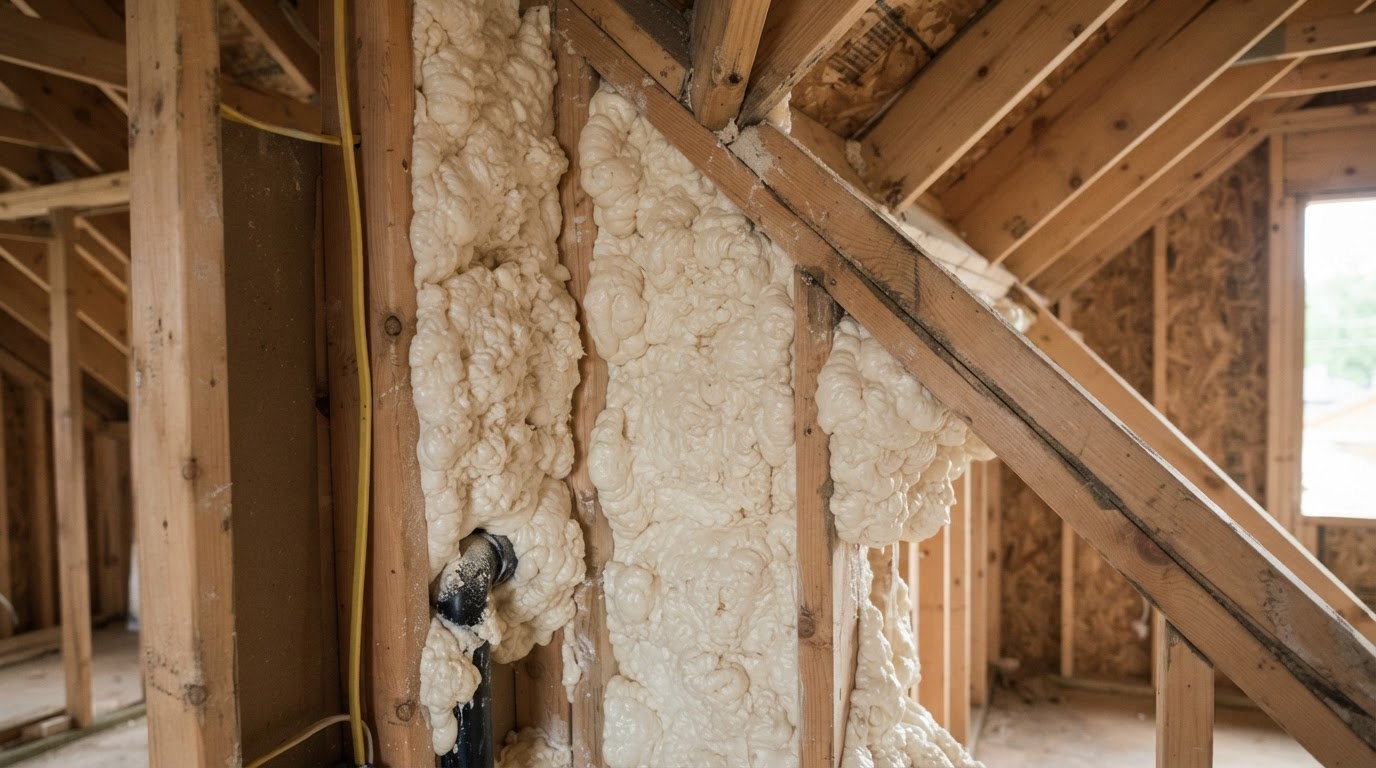
Open Cell Spray Foam Insulation Near San Marcos
Open-cell spray foam is a lower-density, high-expansion polyurethane foam commonly used in interior building assemblies such as attic roof decks and wall cavities. Its expansive fill helps it conform around framing members and seal air pathways within suitable assemblies.
Because open-cell foam is not the right match for every project, selection depends on the assembly, application depth, substrate conditions, moisture considerations, and any applicable code requirements. Exact thermal performance varies by product, manufacturer, and installed thickness.
Open-cell applications may also provide useful acoustic damping within applicable assemblies, though the material should not be described as completely soundproof.
Benefits for San Marcos Property Owners
- Effective coverage of irregular cavities and framing
- Air-control improvement within the building envelope
- Useful in many interior building assemblies
- Expands around framing penetrations to seal gaps
- Potential acoustic improvement in suitable assemblies
Installation Features & Project Considerations
- High-expansion application
- Substrate inspection and preparation
- Application-depth planning
- Attic or wall accessibility review
- Building-envelope evaluation
- Thermal or ignition barrier requirements where applicable
Popular Applications & Solutions
- Attic roof decks and rooflines
- Residential wall cavities
- New construction interiors
- Remodel projects
- Selected interior commercial assemblies
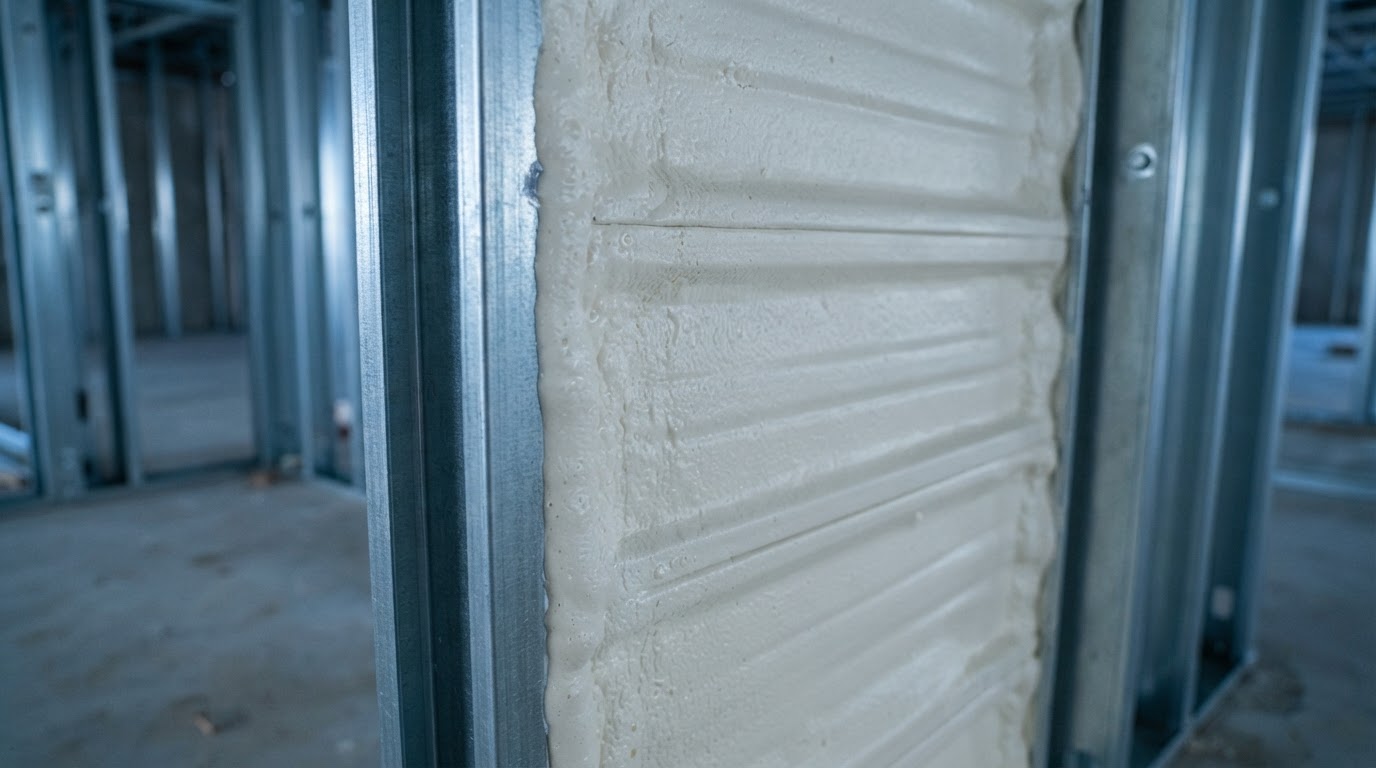
Closed Cell Spray Foam Insulation in San Marcos
Closed-cell spray foam is a denser, rigid polyurethane foam often considered for metal buildings, exterior-facing assemblies, and space-constrained cavities where greater thermal resistance per inch is useful. Its lower vapor permeance compared with open-cell foam can be relevant in selected moisture-sensitive assemblies when properly designed.
Closed-cell foam is not universally waterproof and does not eliminate every moisture problem; successful performance depends on the overall assembly, installed thickness, substrate preparation, and the building's moisture strategy.
Product-specific installation requirements and any applicable code requirements guide how closed-cell foam is applied in each assembly.
Benefits for San Marcos Property Owners
- High insulation performance in relatively limited cavity depth
- Strong air-control characteristics
- Compatibility with many metal-building assemblies
- Added rigidity in some assemblies
- Useful in selected moisture-sensitive applications when correctly designed
Installation Features & Project Considerations
- Dense closed-cell structure
- Application-thickness planning
- Surface and substrate preparation
- Metal-substrate evaluation
- Moisture and condensation considerations
- Building-code requirements where applicable
Popular Applications & Solutions
- Metal buildings and steel structures
- Pole barns and workshops
- Exterior wall assemblies
- Selected roof assemblies
- Commercial structures
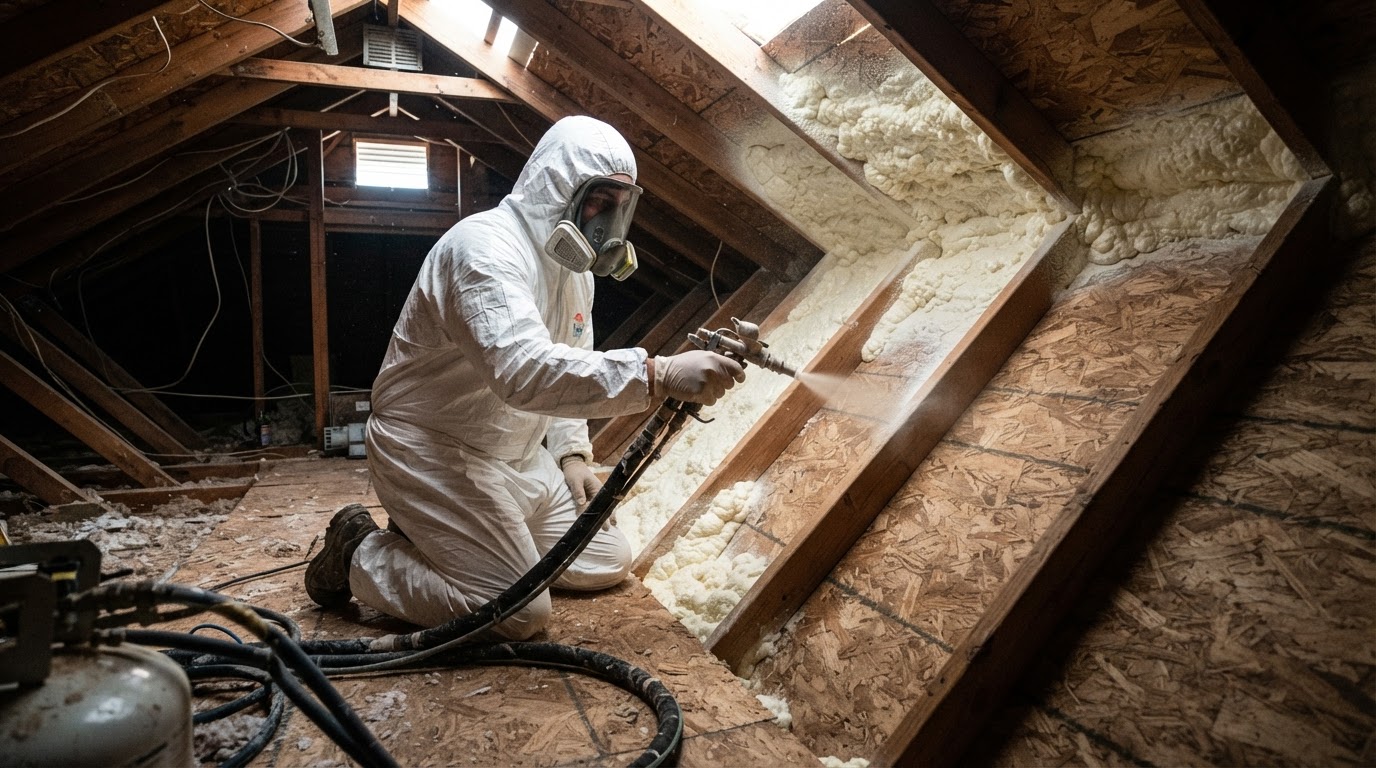
Attic Spray Foam Insulation Near San Marcos
Attic spray foam insulation addresses the air leakage, existing insulation, and roofline conditions that drive hot, inefficient attics in the San Marcos climate. Both attic-floor and roof-deck approaches are considered, depending on where the insulation boundary belongs for the home's design.
When HVAC equipment or ductwork is located in the attic, the ventilation strategy, roof-deck condition, and existing vent configuration all influence the right approach. Converting an attic configuration requires evaluating the entire roof and HVAC assembly rather than simply spraying foam onto surfaces.
Open-cell and closed-cell products each play different roles in attic assemblies, and the selection depends on the planned thermal boundary and moisture strategy.
Benefits for San Marcos Property Owners
- Improved control of attic air leakage
- More consistent indoor comfort
- Improved building-envelope continuity
- Reduced exposure of attic HVAC equipment to extreme conditions as part of a properly designed unvented assembly
- Coverage around complex attic framing
Installation Features & Project Considerations
- Attic inspection
- Existing insulation assessment
- Roof-deck condition evaluation
- Ventilation planning
- HVAC and combustion-equipment considerations
- Foam-type and application-depth selection
Popular Applications & Solutions
- Existing-home attic upgrades
- New-construction attics
- Attic roofline applications
- Attic-floor applications where appropriate
- Bonus-room and home-addition attic assemblies
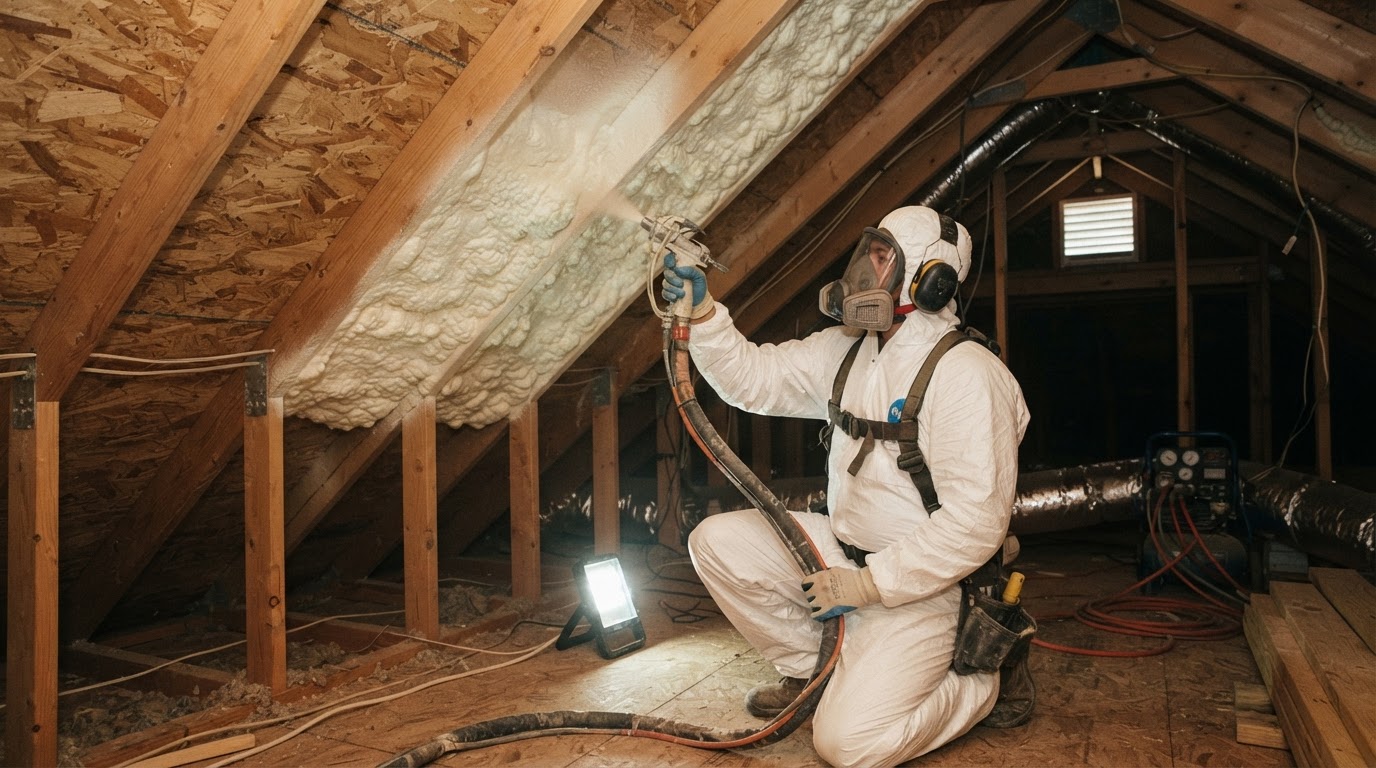
Roof Deck & Unvented Attic Spray Foam Insulation in San Marcos
Roof-deck spray foam applies insulation directly to the underside of roof decking, moving the thermal boundary to the roofline as part of a properly designed unvented attic assembly. This approach can improve envelope continuity and reduce uncontrolled outdoor-air movement through the attic.
Converting to an unvented attic is not as simple as sealing every vent; it requires project-specific evaluation of existing soffit and ridge ventilation, HVAC equipment and ductwork located in the attic, moisture control, roof conditions, and combustion appliance considerations.
Open-cell and closed-cell options are both evaluated against the roof assembly and any applicable building-code requirements.
Benefits for San Marcos Property Owners
- Moves the insulation boundary to the roofline
- Improved attic-envelope continuity
- Reduced uncontrolled outdoor-air movement
- Potentially improved conditions around attic ductwork
- Effective coverage around complex roof framing
Installation Features & Project Considerations
- Roof-deck condition review
- Existing ventilation evaluation
- HVAC and mechanical-system review
- Moisture-management planning
- Spray-foam type selection
- Thermal or ignition barrier requirements where applicable
Popular Applications & Solutions
- Unvented attic assemblies
- Conditioned attic designs
- Roof-deck insulation
- New residential construction
- Existing attic conversions where appropriate
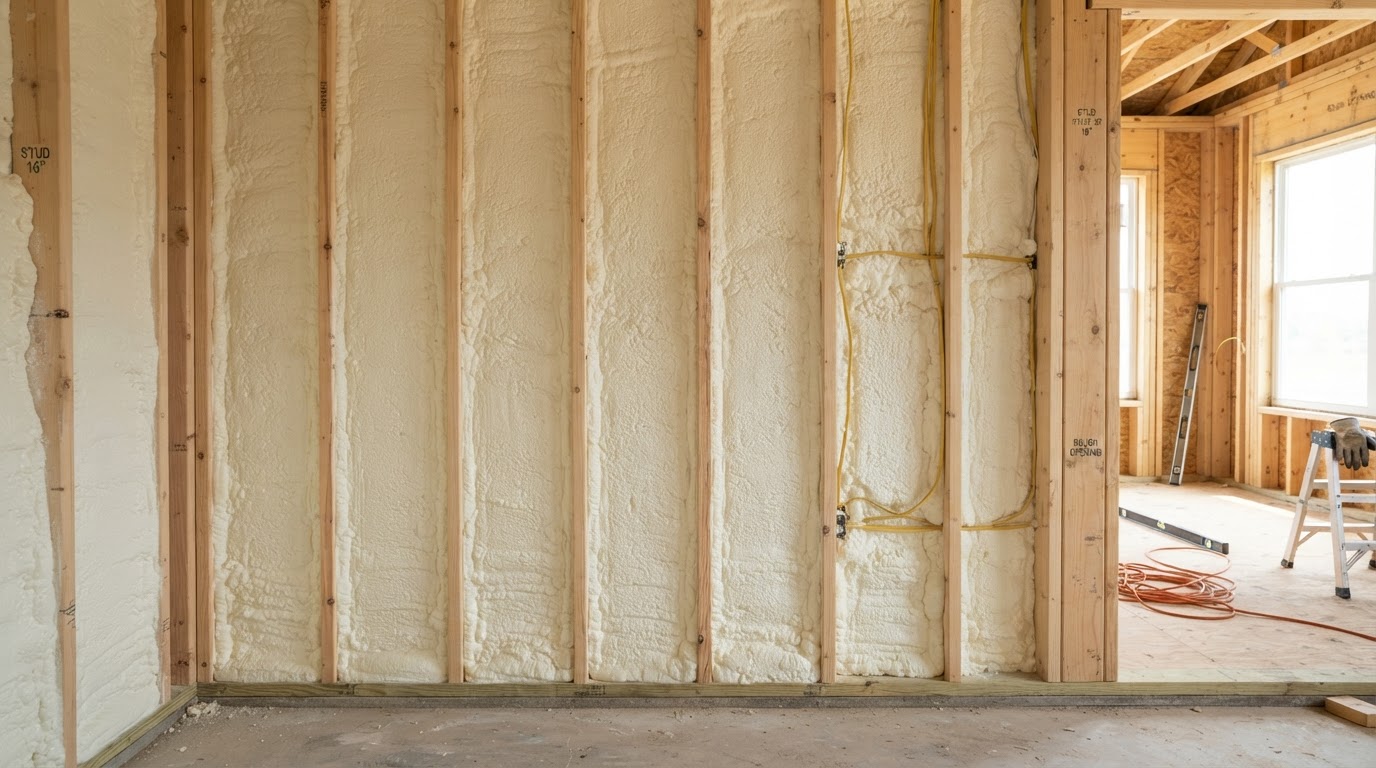
Wall Spray Foam Insulation Near San Marcos
Wall spray foam insulation fills accessible wall cavities in new construction, remodeling, and selected retrofit projects around San Marcos. In open framing, the foam conforms around stud depth, plumbing and electrical penetrations, and window and door framing.
Not every finished wall can simply be filled with spray foam without opening or preparing the assembly, so wall projects depend on access, stud depth, substrate preparation, and whether the wall is open or enclosed.
Open-cell and closed-cell products are selected based on the wall assembly, moisture considerations, and any interior finish requirements.
Benefits for San Marcos Property Owners
- Air sealing around irregular wall penetrations
- Improved insulation continuity across the wall
- Better-performing exterior wall assemblies
- Coverage around complex framing
- Improved indoor comfort when integrated into the building envelope
Installation Features & Project Considerations
- Wall-cavity evaluation
- Stud-depth assessment
- Utility-penetration preparation
- Foam-type selection
- Application-depth planning
- Surface trimming and preparation for finishes where applicable
Popular Applications & Solutions
- New-home exterior walls
- Home additions
- Remodel projects
- Commercial wall assemblies
- Accessible retrofit wall assemblies
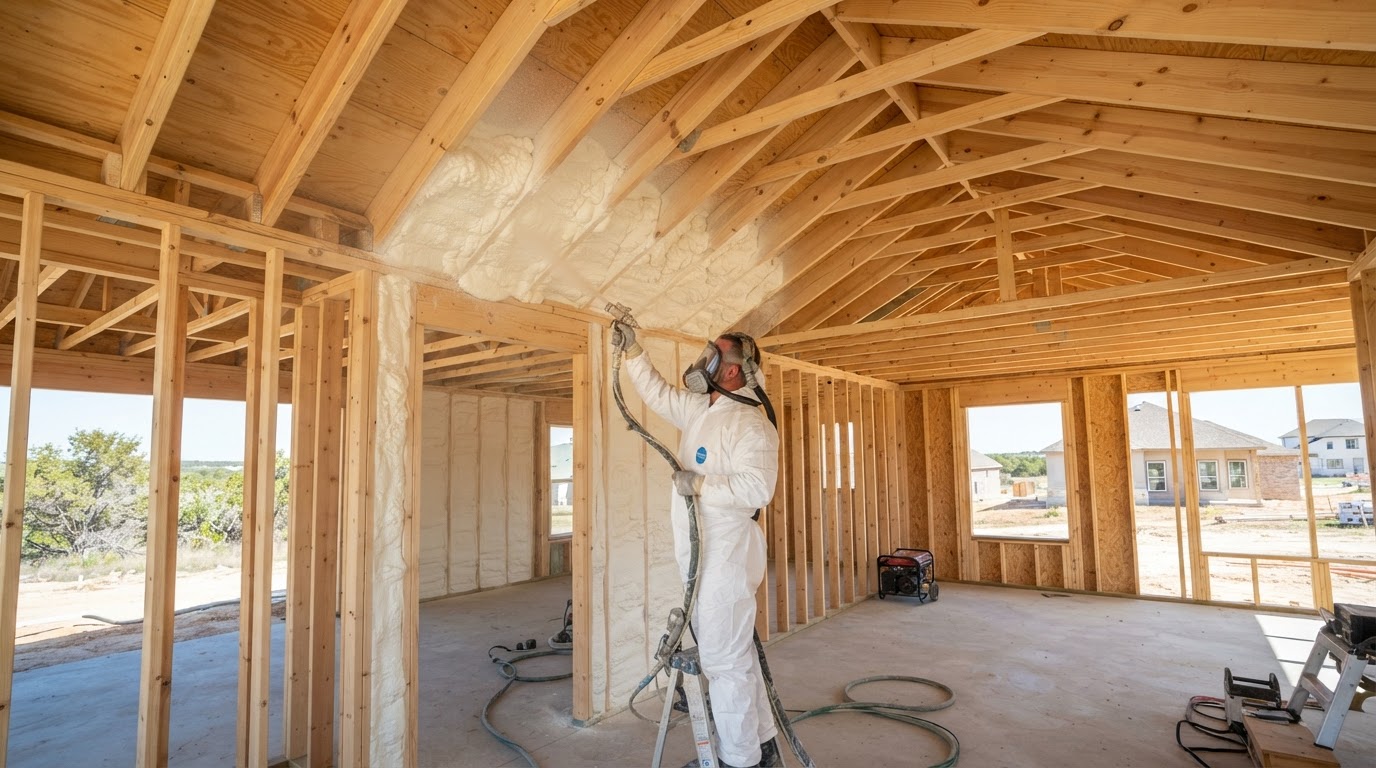
New Construction Spray Foam Insulation in San Marcos
New construction spray foam insulation is planned during building for residential and commercial projects in the San Marcos area. Installing at the framing stage gives full access to rooflines, wall cavities, and utility penetrations before finishes close the assemblies.
Pre-installation planning coordinates roofline strategy, wall assemblies, mechanical systems, and plumbing and electrical rough-ins, with installation sequencing timed around inspections and drywall preparation.
Deciding the insulation and air-control strategy before walls and ceilings are closed helps reduce the need for disruptive retrofit work later.
Benefits for San Marcos Property Owners
- Full access to framing cavities
- Easier building-envelope planning
- Better coordination between insulation and mechanical systems
- Reduced need for disruptive retrofit work later
- Ability to plan foam application around the complete building design
Installation Features & Project Considerations
- Plan and assembly review
- Framing-stage installation
- Roof-deck and wall coordination
- Utility-penetration preparation
- HVAC coordination
- Installation sequencing before interior finishes
Popular Applications & Solutions
- Custom homes
- Residential developments
- Commercial construction
- Home additions
- Barndominiums and detached buildings
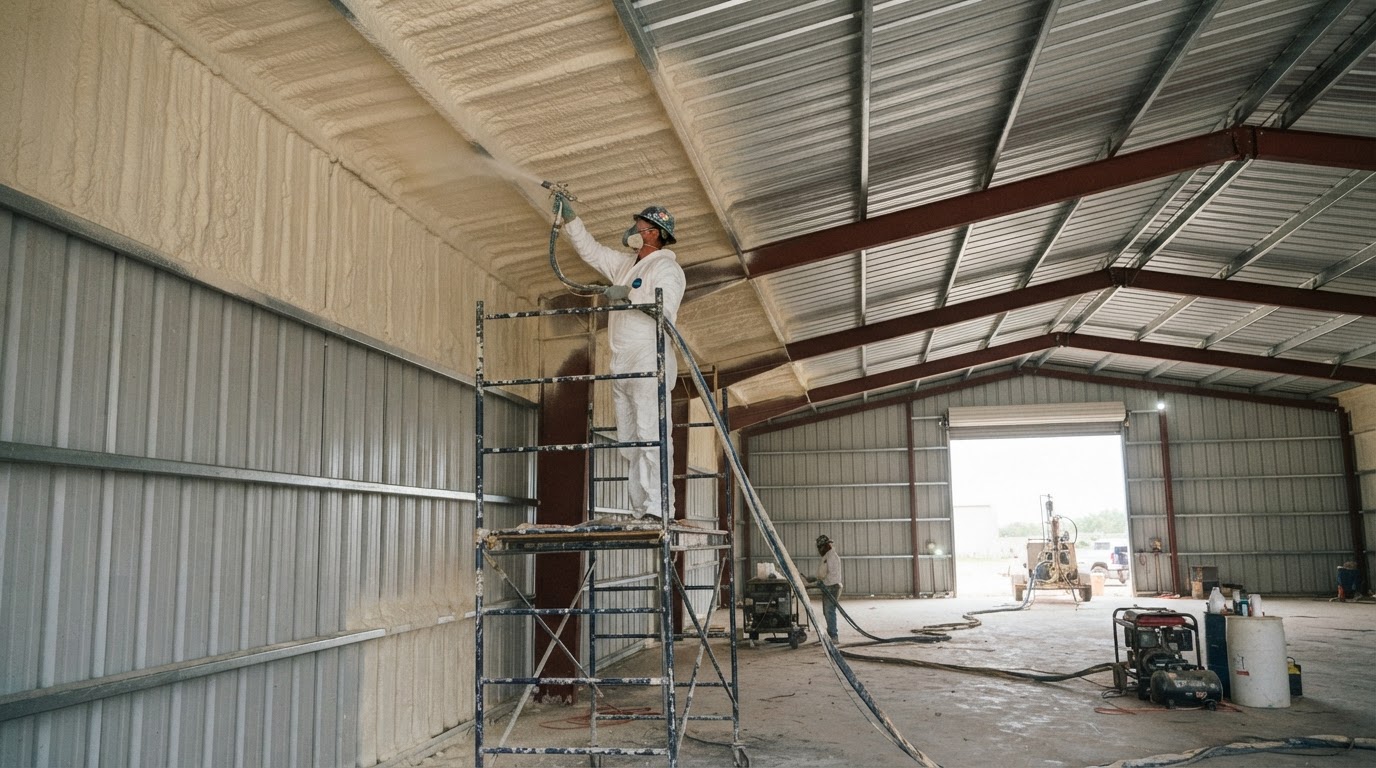
Metal Building Spray Foam Insulation Near San Marcos
Metal building spray foam insulation addresses the temperature differences and condensation risk that affect steel and metal structures across Central Texas. Foam can be applied directly to metal wall and roof panels where the assembly allows, helping control interior surface temperatures and air movement.
Metal-building insulation design should account for surface preparation, existing coatings, interior framing, condensation considerations, building use, and ventilation. Closed-cell and open-cell products are selected based on the assembly and intended use.
Large-surface application and interior finish requirements are also factored into the project plan.
Benefits for San Marcos Property Owners
- Insulation applied directly to complex metal surfaces where appropriate
- Reduced uncontrolled air movement
- Improved interior comfort
- Better building-envelope continuity
- Useful coverage around ribs, framing, and penetrations
Installation Features & Project Considerations
- Metal-surface inspection
- Cleaning and preparation
- Condensation assessment
- Foam-type selection
- Application-depth planning
- Interior coating or barrier considerations where applicable
Popular Applications & Solutions
- Metal shops and workshops
- Storage buildings
- Agricultural structures
- Barndominiums
- Commercial metal buildings and detached garages
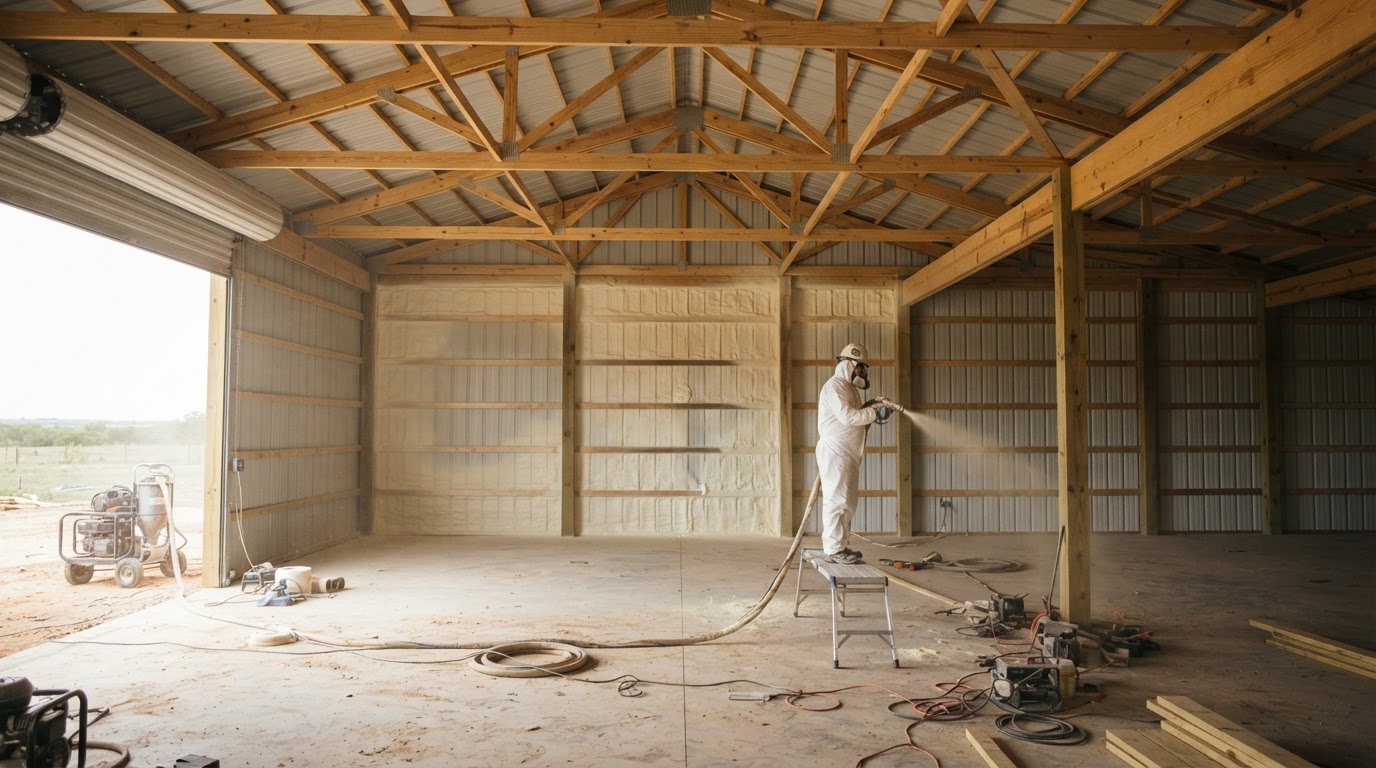
Pole Barn Spray Foam Insulation in San Marcos
Pole barn spray foam insulation serves post-frame buildings, equipment barns, enclosed shops, and similar structures in the San Marcos area. Foam can be applied to metal roof and wall panels where the assembly allows, helping manage interior surface temperatures and condensation as part of a properly designed envelope.
The appropriate insulation strategy depends on whether the structure is enclosed, conditioned, and intended for regular occupancy versus agricultural or storage use. Ventilation, surface preparation, and open-cell versus closed-cell selection all factor into the plan.
Agricultural or partially open structures may have different moisture and ventilation requirements than enclosed, conditioned buildings.
Benefits for San Marcos Property Owners
- Improved comfort in enclosed pole buildings
- Air-control improvement across the envelope
- Coverage around irregular post-frame construction
- Condensation-management opportunities as part of a properly designed assembly
- Improved usability of conditioned work or storage spaces
Installation Features & Project Considerations
- Post-frame assessment
- Metal-substrate preparation
- Roof and wall application planning
- Ventilation evaluation
- Foam-type selection
- Interior-finish considerations
Popular Applications & Solutions
- Agricultural pole barns and equipment buildings
- Storage buildings
- Enclosed post-frame shops
- Barndominiums
- Hobby and outbuilding structures
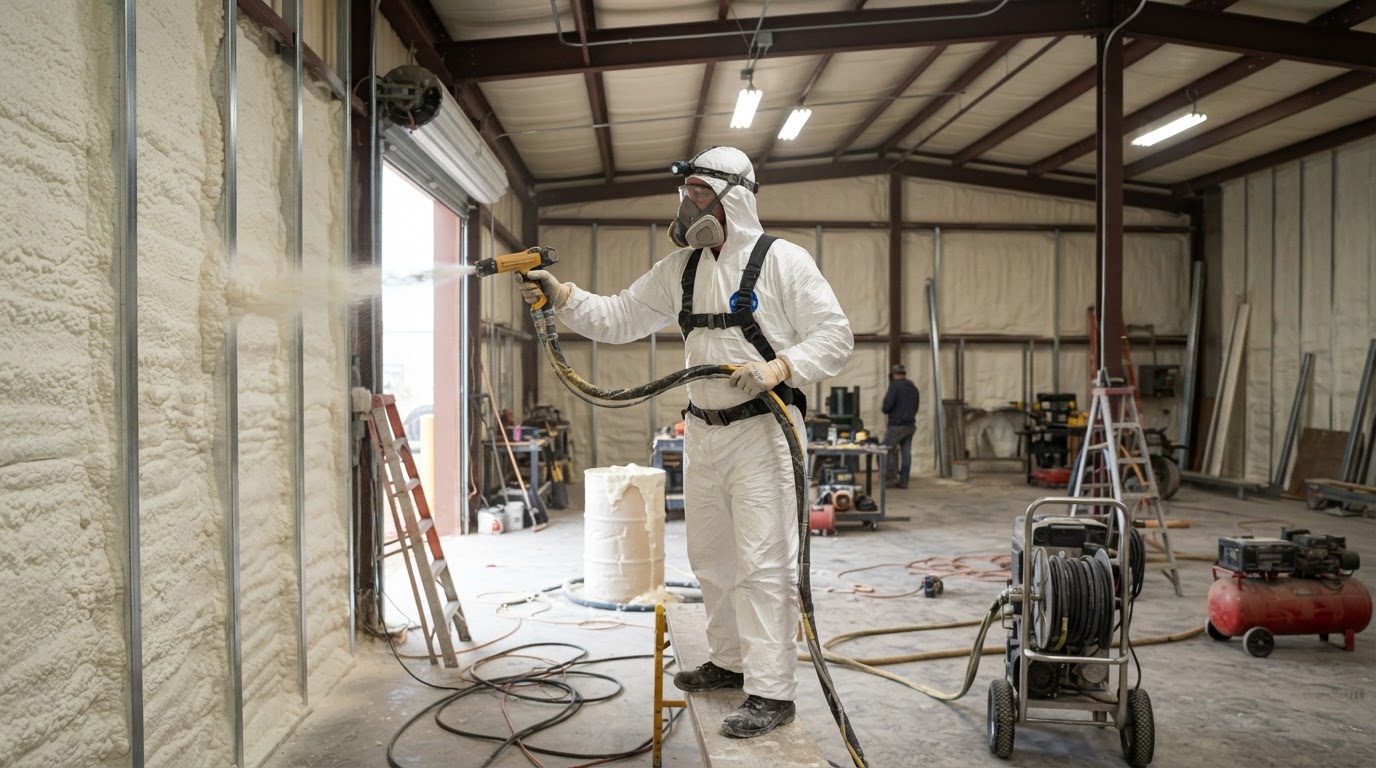
Workshop Spray Foam Insulation Near San Marcos
Workshop spray foam insulation supports detached workshops, mechanic shops, hobby spaces, and other enclosed work buildings near San Marcos. The appropriate approach reflects how the building is actually used, whether it is metal or wood-framed, and whether it is conditioned or intermittently heated.
Roof assemblies, exterior walls, garage-door leakage, equipment heat, and ventilation all influence the insulation plan. Open-cell and closed-cell foam are selected based on the substrate and the intended use of the space.
Interior finish requirements and any coatings or barriers are considered alongside the foam application.
Benefits for San Marcos Property Owners
- Improved comfort during hot and cold weather
- Better control of unwanted air movement
- More usable year-round work areas
- Coverage around complex framing and penetrations
- Improved building-envelope continuity
Installation Features & Project Considerations
- Workshop-envelope evaluation
- Roof and wall insulation planning
- Metal-surface considerations
- Ventilation assessment
- Foam-type selection
- Interior coating or finish requirements
Popular Applications & Solutions
- Mechanic and woodworking shops
- Hobby buildings
- Detached workshops
- Farm workshops
- Small commercial workspaces
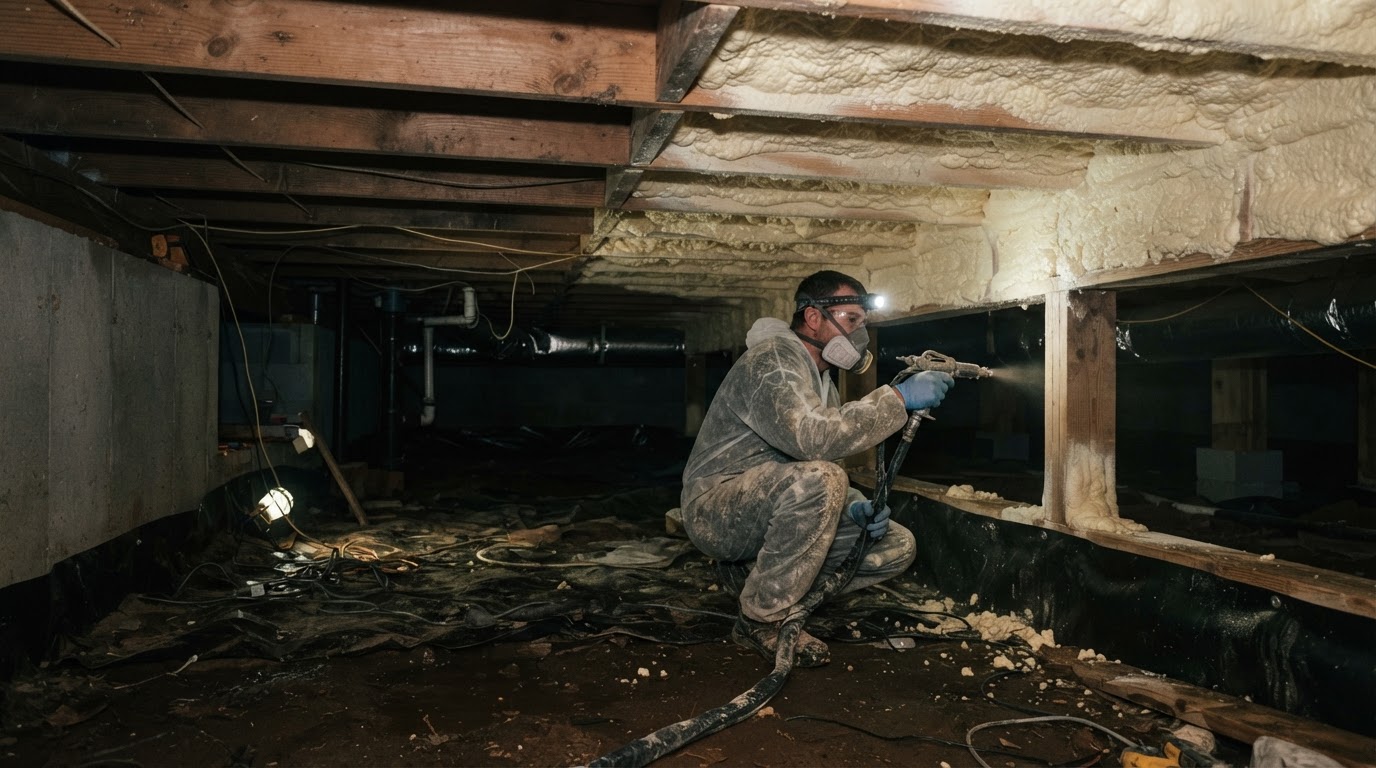
Crawl Space Spray Foam Insulation in San Marcos
Crawl space spray foam insulation applies to suitable floor systems, rim joists, and selected crawl-space wall assemblies in raised-floor homes around San Marcos. The goal is to improve insulation continuity and reduce uncontrolled air movement through the floor assembly.
Spray foam alone does not solve active water intrusion, drainage problems, mold, or pest infestations. Active moisture or structural problems should be addressed before insulation is applied, and the ventilation or encapsulation strategy is evaluated as part of the project.
Open-cell and closed-cell products are selected based on moisture conditions, plumbing and ductwork clearance, and access.
Benefits for San Marcos Property Owners
- Reduced uncontrolled air movement through floor assemblies
- Improved insulation continuity under the home
- Better coverage around rim joists and penetrations
- Improved comfort in rooms above applicable crawl spaces
- Reduced sagging issues associated with some batt installations
Installation Features & Project Considerations
- Moisture-condition evaluation
- Existing insulation assessment
- Floor and rim-joist access review
- Plumbing and mechanical clearance
- Foam-type selection
- Crawl-space ventilation strategy
Popular Applications & Solutions
- Raised-floor homes
- Rim-joist insulation
- Floor-system insulation
- Crawl-space wall applications where appropriate
- Home additions and existing-home upgrades
Ready to discuss a specific project in San Marcos or a surrounding community?
Request a Spray Foam EstimateAverage Spray Foam Insulation Cost & Pricing in San Marcos, TX
Spray foam insulation cost in San Marcos varies based on the total square footage being insulated, total board footage, required foam thickness, and whether open-cell or closed-cell foam is selected. Attic, roof deck, wall, metal building, and whole-structure applications each carry different material and labor requirements, and new construction spray foam insulation cost often differs from retrofit work. Accessibility of the work area, roof pitch, framing configuration, existing insulation, insulation removal where required, surface preparation, masking and protection, the height of the work area, equipment access, ventilation requirements, and any thermal or ignition barriers where applicable all influence the final figure. Because spray foam is commonly calculated as surface area multiplied by installed thickness to determine board footage, two buildings with the same floor square footage can have very different spray foam pricing. A project-specific spray foam insulation estimate near San Marcos is the only way to confirm accurate pricing for your building.
Pricing shown below represents general planning ranges for residential and commercial spray foam insulation projects in the San Marcos area. These figures are not fixed prices or final installation quotes. Accurate pricing requires an evaluation of the area being insulated, total square footage, foam type, required thickness, accessibility, existing insulation, preparation requirements and overall project conditions.
| Service | Materials, Labor & Major Cost Factors | Typical San Marcos Project Price Range |
|---|---|---|
| Spray Foam Insulation San Marcos | Total insulation area, foam type, installed thickness, board footage, framing configuration, attic or wall access, substrate preparation, masking, equipment setup, existing insulation conditions and overall project complexity. Smaller targeted applications can fall toward the lower end, while whole-home, large roof-deck or multi-area insulation projects can require substantially more material and labor. | $1,500–$25,000+ |
| Residential Spray Foam Insulation San Marcos | Home size, attic or wall configuration, open-cell versus closed-cell foam, required thickness, roof pitch, access, existing insulation, preparation, masking, HVAC obstructions and whether one area or the full building envelope is being insulated. A single attic, addition or targeted area generally costs less than insulating multiple assemblies or completing a whole-home spray foam project. | $2,500–$25,000+ |
| Commercial Spray Foam Insulation San Marcos | Building size, ceiling height, wall and roof-deck area, foam type, installed thickness, lift or equipment access, masking requirements, work sequencing, substrate conditions and the scale of the commercial insulation scope. Smaller commercial spaces can fall toward the lower end, while large buildings, high ceilings, extensive roof assemblies and multi-phase applications may increase the total substantially. | $5,000–$75,000+ |
| Open Cell Spray Foam Insulation San Marcos | Total board footage, application thickness, attic or wall surface area, roof geometry, framing depth, access, preparation, masking, existing insulation and the amount of foam required to achieve the specified assembly. Open-cell foam generally uses a lower-cost material per board foot than closed-cell foam, but total project cost still depends heavily on coverage area and required thickness. | $1,500–$15,000+ |
| Closed Cell Spray Foam Insulation San Marcos | Board footage, required thickness, surface area, substrate condition, access, framing configuration, masking, equipment setup and application requirements for the specific assembly. Closed-cell foam is denser and typically costs more per board foot than open-cell foam, so total pricing can rise on large areas or applications requiring greater material volume. | $2,500–$25,000+ |
| Attic Spray Foam Insulation San Marcos | Attic dimensions, roof pitch, foam type, roof deck versus attic-floor application, required thickness, access, HVAC equipment, existing insulation, insulation removal where necessary, preparation and ventilation strategy. Straightforward accessible attics generally cost less than large, steep, obstructed or complex attic assemblies requiring additional preparation or insulation work. | $2,500–$12,000 |
| Roof Deck & Unvented Attic Spray Foam Insulation San Marcos | Roof-deck surface area, roof pitch, valleys and transitions, rafter configuration, foam type, application thickness, attic access, mechanical equipment, surface preparation and existing insulation conditions. Large roof decks, steep rooflines, complex framing and difficult-access areas can require more preparation, labor and foam than smaller straightforward attic assemblies. | $4,000–$15,000+ |
| Wall Spray Foam Insulation San Marcos | Wall surface area, stud depth, open versus enclosed cavities, new construction versus retrofit access, foam type, thickness, electrical and plumbing penetrations, masking, preparation and finish-stage requirements. Accessible open framing is typically less complicated than retrofit wall work requiring additional access, preparation or coordination around existing finishes. | $2,500–$10,000+ |
| New Construction Spray Foam Insulation San Marcos | Building size, architectural plans, wall and roof assemblies, open-cell versus closed-cell specifications, required thickness, sequencing with other trades, ceiling height, total board footage and overall building-envelope scope. Smaller new homes and targeted assemblies generally cost less than large custom homes or projects using spray foam throughout walls, rooflines and additional conditioned assemblies. | $6,000–$30,000+ |
| Metal Building Spray Foam Insulation San Marcos | Building dimensions, wall and roof surface area, metal-panel configuration, ceiling height, open-cell versus closed-cell foam, required thickness, surface condition, equipment access, masking, doors, framing members and overall application complexity. Smaller garages and workshops generally require less material than large metal buildings, shops, agricultural structures or expansive roof-and-wall applications. | $3,500–$30,000+ |
Materials, labor & major cost factors: Total insulation area, foam type, installed thickness, board footage, framing configuration, attic or wall access, substrate preparation, masking, equipment setup, existing insulation conditions and overall project complexity.
$1,500–$25,000+
Smaller targeted applications can fall toward the lower end, while whole-home, large roof-deck or multi-area insulation projects can require substantially more material and labor.
View spray foam insulation services in San MarcosMaterials, labor & major cost factors: Home size, attic or wall configuration, open-cell versus closed-cell foam, required thickness, roof pitch, access, existing insulation, preparation, masking, HVAC obstructions and whether one area or the full building envelope is being insulated.
$2,500–$25,000+
A single attic, addition or targeted area generally costs less than insulating multiple assemblies or completing a whole-home spray foam project.
Explore residential spray foam insulationMaterials, labor & major cost factors: Building size, ceiling height, wall and roof-deck area, foam type, installed thickness, lift or equipment access, masking requirements, work sequencing, substrate conditions and the scale of the commercial insulation scope.
$5,000–$75,000+
Smaller commercial spaces can fall toward the lower end, while large buildings, high ceilings, extensive roof assemblies and multi-phase applications may increase the total substantially.
Learn about commercial spray foam insulationMaterials, labor & major cost factors: Total board footage, application thickness, attic or wall surface area, roof geometry, framing depth, access, preparation, masking, existing insulation and the amount of foam required to achieve the specified assembly.
$1,500–$15,000+
Open-cell foam generally uses a lower-cost material per board foot than closed-cell foam, but total project cost still depends heavily on coverage area and required thickness.
View open cell spray foam insulationMaterials, labor & major cost factors: Board footage, required thickness, surface area, substrate condition, access, framing configuration, masking, equipment setup and application requirements for the specific assembly.
$2,500–$25,000+
Closed-cell foam is denser and typically costs more per board foot than open-cell foam, so total pricing can rise on large areas or applications requiring greater material volume.
Learn about closed cell spray foam insulationMaterials, labor & major cost factors: Attic dimensions, roof pitch, foam type, roof deck versus attic-floor application, required thickness, access, HVAC equipment, existing insulation, insulation removal where necessary, preparation and ventilation strategy.
$2,500–$12,000
Straightforward accessible attics generally cost less than large, steep, obstructed or complex attic assemblies requiring additional preparation or insulation work.
Explore attic spray foam insulationMaterials, labor & major cost factors: Roof-deck surface area, roof pitch, valleys and transitions, rafter configuration, foam type, application thickness, attic access, mechanical equipment, surface preparation and existing insulation conditions.
$4,000–$15,000+
Large roof decks, steep rooflines, complex framing and difficult-access areas can require more preparation, labor and foam than smaller straightforward attic assemblies.
View roof deck spray foam insulationMaterials, labor & major cost factors: Wall surface area, stud depth, open versus enclosed cavities, new construction versus retrofit access, foam type, thickness, electrical and plumbing penetrations, masking, preparation and finish-stage requirements.
$2,500–$10,000+
Accessible open framing is typically less complicated than retrofit wall work requiring additional access, preparation or coordination around existing finishes.
Learn about wall spray foam insulationMaterials, labor & major cost factors: Building size, architectural plans, wall and roof assemblies, open-cell versus closed-cell specifications, required thickness, sequencing with other trades, ceiling height, total board footage and overall building-envelope scope.
$6,000–$30,000+
Smaller new homes and targeted assemblies generally cost less than large custom homes or projects using spray foam throughout walls, rooflines and additional conditioned assemblies.
Explore new construction spray foam insulationMaterials, labor & major cost factors: Building dimensions, wall and roof surface area, metal-panel configuration, ceiling height, open-cell versus closed-cell foam, required thickness, surface condition, equipment access, masking, doors, framing members and overall application complexity.
$3,500–$30,000+
Smaller garages and workshops generally require less material than large metal buildings, shops, agricultural structures or expansive roof-and-wall applications.
View metal building spray foam insulationThese figures are preliminary planning ranges rather than advertised fixed prices for spray foam insulation projects in the San Marcos area. Final pricing may be higher or lower depending on measurements, foam type, installed thickness, total board footage, accessibility, existing insulation, preparation requirements, building configuration and requested scope. A project evaluation is required for accurate pricing.
Request an Accurate Spray Foam Insulation Estimate in San Marcos
An accurate estimate is easier to prepare when you can share your project address, the type of building, the area that needs insulation, approximate dimensions, whether the application is an attic, roof deck, walls, metal building or other assembly, and whether it is new construction or an existing structure. Existing insulation conditions, a desired foam type when known, and photos of the project area when available all help. You do not need to know technical spray foam terminology before contacting us.
Open Cell vs. Closed Cell Spray Foam in San Marcos, TX
Choosing between open-cell and closed-cell spray polyurethane foam requires understanding their distinct physical densities, expansion properties, moisture dynamics, and structural characteristics.
Which spray foam is better for a San Marcos property?
Answer: It depends on the building assembly, intended use, moisture management strategy, available cavity depth, structural framing type, budget, and performance goals. Neither foam type is universally superior; each is engineered for distinct installation environments across Central Texas.
Understanding Open-Cell Polyurethane Foam
Open-cell spray foam (typically around 0.5 lb/cu.ft. nominal density) is a pliable, lightweight material characterized by interconnected cell structures. Upon application, it expands rapidly—often reaching over 100 times its liquid volume. This high expansion makes open-cell foam highly effective for filling irregular cavities, deep roof rafters, and framed interior wall bays in San Marcos homes. It forms an airtight seal that blocks convection while remaining vapor-permeable, allowing assemblies to dry if incidental moisture enters. Open-cell foam also provides notable acoustic dampening between interior rooms.
Understanding Closed-Cell Polyurethane Foam
Closed-cell spray foam (typically around 2.0 lb/cu.ft. nominal density) features tightly packed, microscopic gas-filled cells that create a rigid, highly durable matrix. Closed-cell foam offers higher thermal resistance per inch of installed thickness than open-cell formulations, making it ideal when framing depth is restricted. Because of its dense cell matrix, closed-cell foam exhibits low vapor permeance, functioning as both an air barrier and a vapor retarder at appropriate thicknesses. It also adds measurable structural racking strength, making it the preferred choice for pre-engineered metal buildings, steel shop walls, and agricultural facilities throughout the Texas Hill Country.
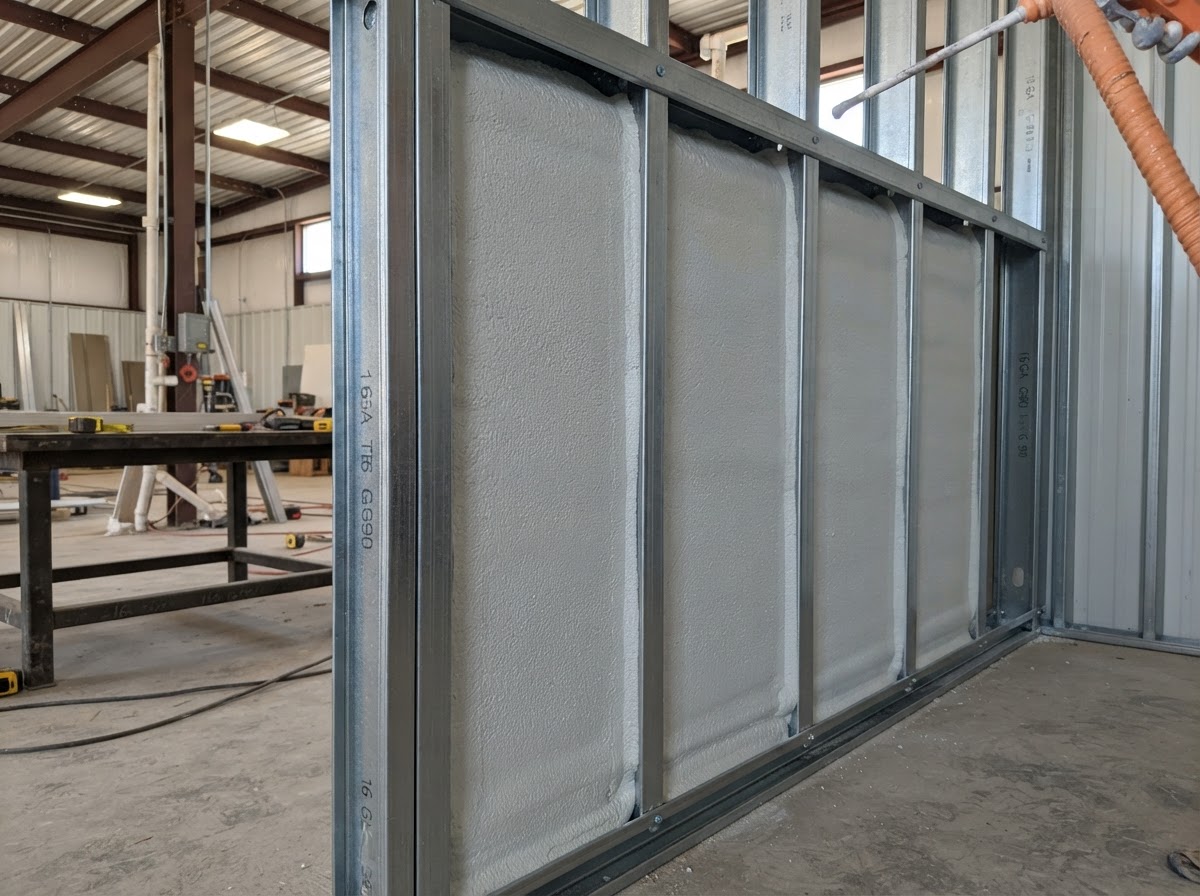
Note on Thermal Performance: Exact R-values, expansion ratios, and permeance ratings vary by chemical manufacturer, product formulation, and installed thickness. Performance specifications must be verified against current manufacturer technical data sheets.
Direct Side-by-Side Foam Comparison
| Feature / Property | Open-Cell Foam (0.5 lb) | Closed-Cell Foam (2.0 lb) |
|---|---|---|
| Density & Structure | Low density (approx 0.5 lb/cu.ft.), flexible, interconnected open cells | Medium-high density (approx 2.0 lb/cu.ft.), rigid, closed cell structure |
| Expansion Profile | Expands substantially (100x+), rapid cavity filling | Controlled expansion (approx 30x–40x), denser build per pass |
| Thermal Resistance / Inch | Moderate R-value per inch (product-dependent); requires deeper cavities | Higher R-value per inch (product-dependent); ideal for shallow depths |
| Vapor & Moisture Characteristics | Vapor-permeable; allows directional drying in interior wood assemblies | Low vapor permeance; acts as vapor retarder at specified thicknesses |
| Structural Racking Strength | Negligible structural contribution; highly pliable | Adds measurable racking strength and rigidity to metal and framed walls |
| Typical San Marcos Project Selection | Residential attics, interior wall acoustic partitions, wood-framed new construction | Pre-engineered metal buildings, steel barndominium shells, crawl spaces, shallow wall cavities |
How Spray Foam Insulation Is Installed Near San Marcos, TX
Professional spray polyurethane foam installation is a precision chemical application that requires specialized proportioning equipment, controlled substrate temperatures, strict safety containment, and personal protective equipment. We follow a rigorous 6-step contractor process for homes, commercial suites, steel buildings, and barndominiums.
Project Evaluation
We assess the building structure, measuring cavity depths, inspecting framing substrates, identifying air bypasses, and reviewing intended heating and cooling strategies.
Assembly & Application Review
Our specialists determine whether open-cell or closed-cell foam is suited for your specific assembly, reviewing moisture dynamics, vapor permeance, and local code considerations.
Preparation and Protection
Before spraying begins, our crew masks windows, doors, floors, electrical panels, and mechanical components. Specialized ventilation equipment is arranged to manage airborne particulates.
Spray Foam Application
Trained installers apply the chemical components using heated, high-pressure proportioning equipment. Proper pass thicknesses and curing intervals are maintained to ensure optimal cell matrix formation.
Thickness & Coverage Review
Installers gauge the applied foam depth across wall studs, rafters, and rim joists. Excess open-cell foam is trimmed flush where necessary for drywall or cladding installation.
Cleanup & Completion Guidance
We perform full job site cleanup, dispose of masking materials, and review post-installation ventilation and re-entry guidance specific to the product formulation installed.
Ready to coordinate your insulation phase?
We coordinate installation schedules with homeowners, general contractors, and builders across Central Texas.
Choosing a Spray Foam Contractor in San Marcos, TX
Selecting the right insulation contractor is one of the most critical decisions for any residential build, commercial renovation, or metal building project. Spray polyurethane foam is not a pre-manufactured commodity dropped into a wall—it is a chemical product manufactured directly on your job site.
When evaluating spray foam contractors in San Marcos and surrounding Central Texas communities, property owners should focus on the factors that genuinely impact installation quality and long-term envelope performance:
Assembly Understanding
Evaluating roof decks, wall assemblies, and foundation details to specify the right foam density and thickness.
Surface Protection
Thorough masking of windows, doors, structural steel, and mechanical units to prevent overspray drift.
Clear Project Scope
Transparent proposals detailing board feet, target thicknesses, substrate preparation, and completion expectations.
Safety & Ventilation Guidance
Clear communication on active ventilation, curing protocols, and property re-entry instructions.
San Marcos Spray Foam Installation provides reliable, transparent spray foam solutions tailored to the climate demands of Central Texas and the I-35 corridor.
Planning a Spray Foam Project in San Marcos?
Speak with our team to discuss your building design, square footage, foam preferences, and scheduling requirements.
Spray Foam Insulation Near San Marcos and Across Central Texas
Based around San Marcos, our service-area website resources cover spray foam insulation needs throughout communities along the I-35 corridor and surrounding Central Texas markets. From fast-growing residential developments to rural ranch properties, shops, and commercial facilities, we bring professional building envelope insulation to property owners across the region.
Primary Base of Operations: San Marcos, TX 78666. Our team mobilizes across Hays, Comal, Guadalupe, Caldwell, Bastrop, and Travis counties for residential, metal building, and commercial insulation projects.
Spray Foam Insulation FAQs for San Marcos, TX Property Owners
Find direct answers to common questions about spray foam insulation, open-cell vs. closed-cell performance, attic installations, metal buildings, timelines, and costs in San Marcos and Central Texas.
Request a Spray Foam Insulation Estimate in San Marcos, TX
We invite homeowners, custom home builders, commercial property owners, shop owners, and barndominium owners to discuss their insulation project. Get clear guidance on foam selection, thermal envelope design, and job timelines across San Marcos and Central Texas.
San Marcos Spray Foam Installation • San Marcos, TX 78666 • Primary Phone: 512-967-8730